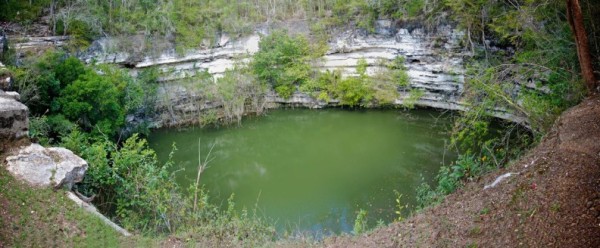
Number 4 in my “10 Global Hellgates” series
“The most accurate theory about the formation of cenotes is truly fascinating. Most parts of the solid ground of Yucatan were underwater thousands of years ago. A lot of living organisms coexisted in these grounds, among coral reefs, plants, and calcium carbonate rich sea life. All these elements created large amounts of limestone that after millions of years gave the white tone to the ground. It is believed that human sacrifices were made in order to be thankful with the gods for the rain or to ask for it. Legend says these cenotes were called the sacred cenotes and today we have the chance to visit them.”
“
The Maya in the northern lowlands, which encompasses parts of the present-day states of Yucatán, Quintana Roo, and Campeche, relied on cenotes (a Spanish corruption of the Yucatec Mayan word for sinkhole, dzonot) as their primary source of water. According to tradition, caves and cenotes are also the home of Chac, the Maya god of rain, as well as the entrance to Xibalba, the Underworld. In times of drought or stress, or when, Maya leaders appealed to Chac by making offerings to him in cenotes.
By the time the Spanish arrived in the Yucatán and recorded the practice in the sixteenth century, the Maya had been performing human sacrifice for at least a thousand years.”
Could all of the human sacrifice in this area, have opened a gateway or a hellgate?
Sources & Further Reading:
Myths, legends, and truths about Mayan cenotes
https://stellarhousepublishing.com/mayan-temple-to-the-water-god-found-in-temple
https://www.worldatlas.com/articles/the-cenotes-of-mexico-ancient-mayan-sacrificial-sites.html
https://www.selvatica.com.mx/top-20-cenotes-riviera-maya-cant-miss-guide/
https://thefairytaletraveler.com/2013/08/07/mayan-underworld-the-gateway-to-hell-belize
http://www.theoccultmuseum.com/5-real-gateways-hell-can-actually-visit/
Also read up on The Mayan Hell legends, especially Xibalba
 StarWolf Geek